A Bundle is already in your cart
You can only have one active bundle against your account at one time.
If you wish to purchase a different bundle please remove the current bundle from your cart.
You have unused credits
You still have credits against a bundle for a different licence. Once all of your credits have been used you can purchase a newly licenced bundle.
If you wish to purchase a different bundle please use your existing credits or contact our support team.
01:12

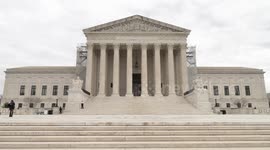
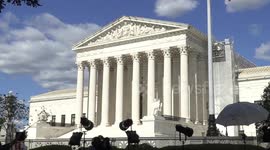
US: US Supreme Court to rule on legality of Trump tariffs

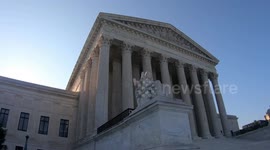
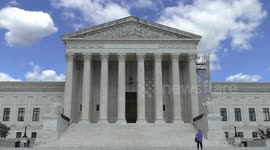
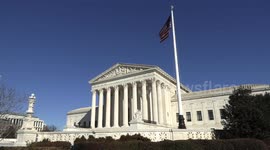
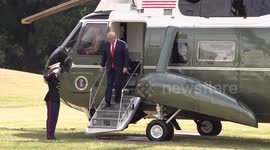
Shotlist FILE: Washington D.C., USA - June 25, 2022 1. Supreme Court, pedestrians FILE: Washington D.C., USA - Oct 2024 2. Various of White House FILE: Washington D.C., USA - Date Unknown 3. Various of Capitol building, U.S. national flag FILE: Los Angeles, USA - Date Unknown 4. Various of scenes at Port of Los Angeles FILE: Los Angeles, USA - Date Unknown 5. Various of port scene; containers, vessel FILE: New York City, USA - Oct 2024 6. Buildings, pedestrians, traffic Storyline The U.S. Supreme Court is expected to rule on Friday on the legality of President Donald Trump's tariffs, a decision that analysts believe will have long-term consequences for U.S. trade policy and the global trading system. Saying that many U.S. trading partners have been taking advantage of low U.S. tariff rates while maintaining higher duties on U.S. goods, Trump invoked his authority under the International Emergency Economic Powers Act of 1977 to "address the national emergency posed by the large and persistent trade deficit" and impose sweeping tariffs on global trading partners. In May last year, the New York-based Court of International Trade declared the tariffs were unlawful. In August, the U.S. Court of Appeals for the Federal Circuit ruled in a 7-4 vote that Trump overstepped his authority when he implemented the tariffs on nearly all trading partners through an emergency economic powers act, saying his action did not fall within the president's mandate and that imposing tariffs was "a core Congressional power." Trump then asked the U.S. Supreme Court to overturn the lower court decision. During a November hearing last year, key members of the Supreme Court expressed skepticism that Trump had authority to rely on the 1977 International Emergency Economic Powers Act to impose the global tariffs. Analysts said the Supreme Court's scheduled ruling on Friday will determine the future of U.S. trade policy and represents a major legal test of the Trump administration's push to expand presidential power. If the court upholds Trump's tariffs, global trade would face more uncertainty, and price and trade costs would further increase, and the global supply chain is more likely to undergo further restructuring. If the court rules against Trump's tariffs, the prices of affected goods will drop, and importers who have already paid tariffs could be eligible to have that money refunded, potentially boosting global trade. If the court opts for a middle ground, the presidential power on trading issues will be limited, promoting short-term stability in global trade, though long-term uncertainties will remain, according to analysts.
Categories
From the blog
Stories not Stock: 3 Reasons Why You Should Use UGC Instead of Stock Video
Video content is an essential part of a brand’s marketing strategy, and while stock footage has been a reliable go-to in the past, forward-thinking companies are looking to user-generated content for their video needs.
View post