A Bundle is already in your cart
You can only have one active bundle against your account at one time.
If you wish to purchase a different bundle please remove the current bundle from your cart.
You have unused credits
You still have credits against a bundle for a different licence. Once all of your credits have been used you can purchase a newly licenced bundle.
If you wish to purchase a different bundle please use your existing credits or contact our support team.
Appears in Newsflare picks
02:07

Mom reveals the subtle sign her kids had 'childhood dementia'

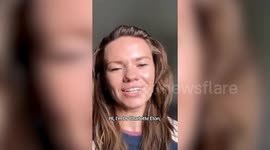
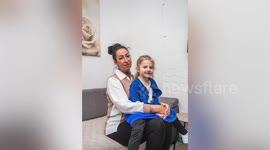
A mom reveals the one subtle sign that led to both her children being diagnosed with a condition dubbed 'childhood dementia'.
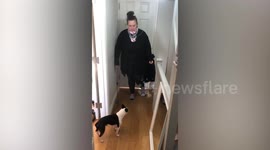
Megan Kempf, 37, noticed her daughter Poppy, nine, was forgetting how to draw when she was just three.
She was diagnosed with mild intellectual disability - which involves slower development in thinking, social, and daily living skills - when she started school.
Megan and her husband Kyle, 36, took Poppy to see a geneticist and genetic testing revealed Poppy had Sanfilippo syndrome type B - a rare genetic, neurodegenerative lysosomal storage disorder
-
when she was eight years old.
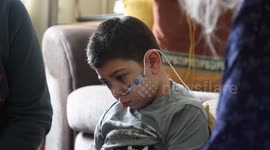
The couple decided to get their newborn son, Oliver, aged two, tested, and he was also diagnosed with the disease.
Sadly, there are no treatment options available for Poppy and Oliver, so Megan has raised $5.5 million with other families for enzyme replacement therapy, which has not yet received approval from the Food and Drug Administration (FDA).
Megan, a stay-at-home mom, from Quincy, Illinois, said: "We had noticed that her drawing skills had regressed; she would be able to draw bodied characters, and we she would regress to drawing circles."
"After Poppy and Oliver were diagnosed, we were told there was nothing doctors could do."
"We were given clinical guidelines, and they told us we were going to qualify for Make-A-Wish, and told to make the best time with our kids."
"We were not going to be ok with that."
"There is nothing to slow down the progression of the disease. We were told there was no treatment or cure, so we immediately started pursuing alternative options."
Megan said she had a "normal pregnancy" with Poppy."
When Poppy was three years old, Megan and Kyle, a director, noticed that she would regress in her development.
Megan noticed that her drawing skills would regress, and she would go from drawing bodied characters to just being able to draw circles.
"We started to investigate more things, and found that Poppy had sleep apnea; she would start getting afraid of bedtime," Megan said."
"I was concerned that her sleep apnea was exacerbating her delays."
"We were having all these concerns, but nothing was super identifiable or severe, so we were being told to wait and see."
Once Poppy started school, her delays became more apparent. When she was five, she was less developed compared to her peers, and she was diagnosed with mild intellectual disability.
After moving to Quincy, Illinois, from Tulsa, Oklahoma, Megan and Kyle were still concerned about Poppy's development, so they went to see a neurologist who recommended Poppy see a to see a geneticist.
Megan said: "We had Poppy's entire DNA genome sequencing, and that came back testing positive for Sanfilippo syndrome type B."
"At that moment, we realized, as it is genetic, that we needed to get our newborn son, Oliver, tested too."
"Three weeks later, we were told that Oliver had tested positive, too."
"To have a diagnosis provided a sense of relief, but never in a million years did we expect to get a life expectancy for our children."
"We were told that most children with Sanfilippo syndrome type B don't survive past 18, and Poppy is nine - she is halfway there."
Not wanting to give up, Megan and 14 other families have found a treatment option that is currently awaiting FDA approval.
The families are currently still raising money so that their children can get enzyme replacement therapy - replacing the enzymes missing in Sanfilippo with ones produced in a lab.
According to the Cure Sanfilippo Foundation, enzyme replacement therapy is a promising treatment being developed to deliver the missing enzyme to the body's cells, though it is still in clinical trials and not yet a cure.
Megan and other Sanfilippo families have already raised $5.5 million and are "hopeful" the drug will be approved and hope their children will have access to it by 2027."
"We are hopeful that the drugs will be on the market next year, but it will take a lot of attention and effort to get there."
"It is hard to get a rare disease to market, and if it is a pediatric disease, your patient doesn't live long."
"We mostly want there to be an answer for all these children."
To donate to their campaign, visit: https://give.curesanfilippofoundation.org/campaign/732486/donate
Categories
From the blog
Stories not Stock: 3 Reasons Why You Should Use UGC Instead of Stock Video
Video content is an essential part of a brand’s marketing strategy, and while stock footage has been a reliable go-to in the past, forward-thinking companies are looking to user-generated content for their video needs.
View post