A Bundle is already in your cart
You can only have one active bundle against your account at one time.
If you wish to purchase a different bundle please remove the current bundle from your cart.
You have unused credits
You still have credits against a bundle for a different licence. Once all of your credits have been used you can purchase a newly licenced bundle.
If you wish to purchase a different bundle please use your existing credits or contact our support team.
02:21

China: Experts warn Trump's H-1B fee could harm US talent pool

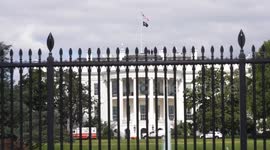
Experts are warning that U.S. President Donald Trump's decision to raise the H-1B visa sponsorship fee to 100,000 U.S. dollars could severely damage America's creative industries and lead to a brain drain of international talent. On Sept 19, President Trump signed a new rule requiring U.S. companies to pay the fee annually for each new H-1B visa applicant -- foreign workers sponsored to take on high-skilled jobs in the United States. Although the administration later clarified that the fee would only apply to new applicants, concerns are already mounting across educational and business sectors worldwide. The H-1B visa is a U.S. non-immigrant visa that allows American companies to temporarily hire foreign professionals in specialty occupations. Trump said the dramatic fee hike is designed to favor hiring Americans. Wang Jin, an associate professor at Northwest University in China, emphasized that visa policy is more than just economics. "Visa (policy), for any country, is a very important tool to control, to select and to monitor what kind of people could enter their countries, and what kind of the foreign policies that are the principles that they would uphold in their foreign activities," said Wang. Zhang Chengguo, founder of international education company Trochilus Edu, said the change could discourage international students from choosing the U.S. as their study destination. "Many students study abroad to find employment. If they cannot obtain an H-1B visa smoothly, they will be reluctant to invest their educational funds in the U.S.," said Zhang. Wang added that top tech innovations often start with people, not corporations. "Big companies, for example, Apple or the other companies like Amazon, they actually not start from a very giant or very successful business men or successful scientists. They actually started from the very shining ideas. You have to encourage everybody join this camp. So that's why the visa (fee) will harm the interests, and actually will negatively influence the future for creativity. And this is also kind of a waste to the United States' human resources," the professor said. As the U.S. tightens its borders, China is preparing to open its doors wider. A new visa category for young science and technology talents will go into effect on October 1. Wang noted a clear contrast in national strategies. "I think China and the United States' visas or foreigner policies represent two mindsets. From the Chinese opinion, China encourages more foreigners to come to China. We need young people, we need young ideas. Compared with United States, they still maintain higher barrier for the foreigners, they have to maybe upgrade the standards for the people who want to stay inside the United States. And I think China represents the future," said Wang. SHOTLIST: FILE: Washington D.C., USA - Date Unknown 1. Various of White House, U.S. national flag; Xi'an City, Shaanxi Province, northwest China - Sept 22, 2025 2. SOUNDBITE (Chinese) Wang Jin, associate professor, Northwest University: "Visa (policy), for any country, is a very important tool to control, to select and to monitor what kind of people could enter their countries, and what kind of the foreign policies that are the principles that they would uphold in their foreign activities."; FILE: Philadelphia, USA - October 2024 3. U.S. national flag; FILE: New York City, USA - October 2024 4. Various of buildings, pedestrians, traffic; China - Sept 22, 2025 5. SOUNDBITE (Chinese, dubbed in English) Zhang Chengguo, founder, Trochilus Edu: "Many students study abroad to find employment. If they cannot obtain an H-1B visa smoothly, they will be reluctant to invest their educational funds in the U.S."; FILE: Detroit, Michigan, USA - March 17, 2025 6. Various of sculptures, buildings; Xi'an City, Shaanxi Province, northwest China - Sept 22, 2025 7. SOUNDBITE (Chinese) Wang Jin, associate professor, Northwest University (partially overlaid with shots 8-11): "Big companies, for example, Apple or the other companies like Amazon, they actually not start from a very giant or very successful business men or successful scientists. They actually started from the very shining ideas. You have to encourage everybody join this camp. So that's why the visa (fee) will harm the interests, and actually will negatively influence the future for creativity. And this is also kind of a waste to the United States' human resources."; [SHOTS OVERLAYING SOUNDBITE] Beijing, China - Sept 23, 2025 8. Wang in interview via video link; FILE: USA - Date Unknown 9. Nvidia logo; FILE: New York City, USA - Oct 30, 2018 10. Apple logo; FILE: USA - Date Unknown 11. Sign of Amazon; [SHOTS OVERLAYING SOUNDBITE] FILE: Shanghai, China - Date Unknown 12. Aerial shots of city view; FILE: Lingshui Li Autonomous County, Hainan Province, south China - July 4, 2024 13. Foreign teacher at class; FILE: Hangzhou City, Zhejiang Province, east China - May 19, 2025 14. Foreign students in science and technology courses; Xi'an City, Shaanxi Province, northwest China - Sept 22, 2025 15. SOUNDBITE (Chinese) Wang Jin, associate professor, Northwest University (partially overlaid with shot 16/ending with shot 17): "I think China and the United States' visas or foreigner policies represent two mindsets. From the Chinese opinion, China encourages more foreigners to come to China. We need young people, we need young ideas. Compared with United States, they still maintain higher barrier for the foreigners, they have to maybe upgrade the standards for the people who want to stay inside the United States. And I think China represents the future."; [SHOT OVERLAYING SOUNDBITE] FILE: Hangzhou City, Zhejiang Province, east China - May 19, 2025 16. Various of foreign students doing experiment; [SHOT OVERLAYING SOUNDBITE] FILE: China - Exact Location and Date Unknown 17. Various of Chinese, foreign experts, business representatives discussing. [Restrictions: No access Chinese mainland]
Categories
From the blog
Stories not Stock: 3 Reasons Why You Should Use UGC Instead of Stock Video
Video content is an essential part of a brand’s marketing strategy, and while stock footage has been a reliable go-to in the past, forward-thinking companies are looking to user-generated content for their video needs.
View post