A Bundle is already in your cart
You can only have one active bundle against your account at one time.
If you wish to purchase a different bundle please remove the current bundle from your cart.
You have unused credits
You still have credits against a bundle for a different licence. Once all of your credits have been used you can purchase a newly licenced bundle.
If you wish to purchase a different bundle please use your existing credits or contact our support team.
02:37

China: Testimony reveals Japan's germ warfare crimes in China

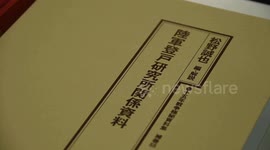
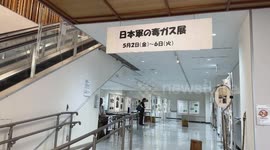
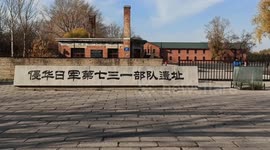
Researchers have confirmed that Unit 731, a Japanese germ-warfare unit that operated during World War II, developed over 50 types of bacteria through human experimentation, later selecting the most lethal strains for use in biological warfare during its invasion of China. According to Jin Shicheng, director of the Department of Publicity, Education and Exhibition at the Exhibition Hall of Evidence of Crimes Committed by Unit 731 of the Japanese Imperial Army in northeast China's Harbin, the unit carried out extensive human experimentation in the Pingfang District of Harbin, with the primary aim of launching bacteriological warfare. Recently, the exhibition hall released a 38-minute video further verifying these historical crimes. The footage features Tsuruo Nishijima, a former member of Unit 731's meteorological squad, offering firsthand testimony. The video was recorded in 1997 by Japanese scholar Fuyuko Nishisato and was donated to the exhibition hall in 2019. The hall itself stands at the former headquarters of Unit 731 in Harbin, the capital of Heilongjiang Province. Nishijima joined Unit 731 in October 1938 and served in its meteorological squad, which was not merely for observation but functioned as a support unit for field experiments. He confirmed that the "meteorological squad had to be present at every field experiment," gathering data on wind direction, wind speed, and other conditions to optimize bacterial dispersion. Nishijima testified that during that operation, Unit 731 mobilized a 30 to 40-person team carrying large quantities of bacterial cultures including typhoid, paratyphoid, cholera, and dysentery, along with plague-infected fleas. As the Japanese ground forces retreated, the team's mission was to spread these pathogens into wells, rivers, farmlands, and residential areas. Jin emphasized that Japan's horrific actions blatantly violated international law. He also said that these were not rogue operations by isolated units, but a state-sponsored, top-down campaign directed by the Japanese militarist regime. Cloaked in the language of "science" and "military necessity," these actions represent one of the gravest betrayals of international law and human conscience, he added. Researchers have said Nishijima's testimony provides direct insight into Unit 731's involvement in both human experimentation and biological warfare, offering irrefutable evidence of war crimes and crimes against humanity. Shotlist: Harbin City, Heilongjiang Province, northeast China - Recent: 1. Various of former sites where Japanese germ-warfare Unit 731 developed bacteria through human experimentation; 2. SOUNDBITE (Chinese) Jin Shicheng, director, Department of Publicity, Education and Exhibition, Exhibition Hall of Evidences of Crime Committed by Unit 731 of Japanese Imperial Army (starting with shot 1): "Starting with the 1939 Nomonhan campaign, bacteriological warfare was launched in several southern Chinese cities, including Quzhou, Ningbo, and Changde, between 1940 and 1941. Weather units took part by providing meteorological data to assist in the execution of germ attacks."; FILE: Japan - 1997 3. SOUNDBITE (Japanese) Tsuruo Nishijima, former Unit 731 member: "I took part in actual combat. It was during the Zhejiang-Jiangxi campaign in 1941 (Showa 16). The so-called Nanchang operation was a military offensive advancing from the Zhejiang-Jiangxi and Hangzhou areas toward Nanchang. As I recall, it was in Showa 16, and I joined the army in that operation."; Harbin City, Heilongjiang Province, northeast China - Recent 4. Various of historical photographs, experimental tools on display at Exhibition Hall of Evidences of Crime Committed by Unit 731 of Japanese Imperial Army; 5. SOUNDBITE (Chinese) Jin Shicheng, director, Department of Publicity, Education and Exhibition, Exhibition Hall of Evidences of Crime Committed by Unit 731 of Japanese Imperial Army (starting with shot 4/partially overlaid with shot 6): "At that time, Japan had signed the international treaty, the Geneva Protocol, in 1925 and was fully aware that the use of biological and chemical weapons was prohibited. However, they still chose to deploy such biological weapons. In their war of aggression abroad, they blatantly disregarded international agreements, focused solely on achieving their expansionist goals, and resorted to every possible means of invasion, ignoring all restraints." [SHOT OVERLAYING SOUNDBITE]; 6. Various of exhibits [SHOT OVERLAYING SOUNDBITE]; 7. Various of pictures, experimental tools on display; 8. SOUNDBITE (Chinese) Jin Shicheng, director, Department of Publicity, Education and Exhibition, Exhibition Hall of Evidences of Crime Committed by Unit 731 of Japanese Imperial Army (partially overlaid with shots 9-10/ending with shot 11): "After the bacteriological warfare was carried out across the Zhejiang-Jiangxi region, many villages in Zhejiang experienced outbreaks of plague, cholera, typhoid, and anthrax. Numerous elderly residents developed what became known as 'rotting foot disease,' a lasting consequence of the germ warfare. Through the collection, organization, and study of evidence related to Unit 731, we have reconstructed a complete chain of war crimes involving biological warfare. This work exposes the crimes against humanity committed by Japan during its invasion of China, allowing more people to learn about this dark chapter of history, so that we may learn from the past, safeguard peace, and never forget the past." [SHOTS OVERLAYING SOUNDBITE]; 9. Tools on display; 10. Aerial shots of exhibition hall [SHOTS OVERLAYING SOUNDBITE]; 11. Former site used by Unit 731 for human experimentation, bacterial weapon development. [Restrictions: No access Chinese mainland]
Categories
From the blog
Stories not Stock: 3 Reasons Why You Should Use UGC Instead of Stock Video
Video content is an essential part of a brand’s marketing strategy, and while stock footage has been a reliable go-to in the past, forward-thinking companies are looking to user-generated content for their video needs.
View post