A Bundle is already in your cart
You can only have one active bundle against your account at one time.
If you wish to purchase a different bundle please remove the current bundle from your cart.
You have unused credits
You still have credits against a bundle for a different licence. Once all of your credits have been used you can purchase a newly licenced bundle.
If you wish to purchase a different bundle please use your existing credits or contact our support team.
02:43

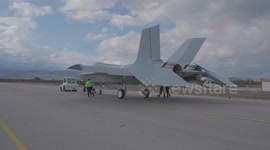
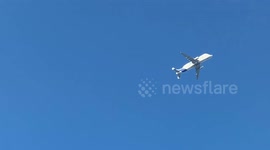
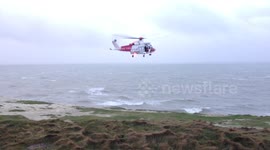
UK's first ever helicopter drone takes maiden flight

Credit: Leonardo S.p.A. and subsidiaries 2026/Cover Images The UK’s first full-size autonomous helicopter has completed its maiden flight. The aircraft, known as the Proteus Technology Demonstrator, took to the air from Predannack airfield on the Lizard Peninsula in Cornwall. Designed and built by Leonardo in Yeovil, it has been developed as a demonstrator for the Royal Navy, exploring how uncrewed aerial systems could operate alongside crewed aircraft in a future “hybrid air wing”. Predannack serves as a satellite airfield for helicopters based at nearby RNAS Culdrose, near Helston, and also plays a central role in the development of autonomous systems as the UK’s National Drone Hub. The flight came just weeks after Proteus completed extensive ground-running trials at Leonardo’s Yeovil site, where its engines, sensors and onboard systems were tested before it was cleared to leave the ground. Engineers, technicians and representatives from Leonardo, the Royal Navy and UK Defence Innovation were present to witness the landmark moment. Autonomous helicopters such as Proteus are expected to form a central part of future hybrid air wings and the Ministry of Defence’s Atlantic Bastion strategy, aimed at securing the North Atlantic. Luke Pollard, the Minister for Defence Readiness and Industry, said: “This maiden flight is a proud moment for British innovation. Designed and built in Yeovil, Proteus supports skilled UK jobs while helping deliver the hybrid navy outlined in our Strategic Defence Review. Autonomous systems like this will be vital in protecting our seas without putting personnel in harm’s way.” While the Royal Navy already operates a number of uncrewed systems, Proteus represents a major leap in scale, complexity, and autonomy. Instead of a human crew, the cockpit and cabin are occupied by sensors and computer systems, driven by advanced software that allows the aircraft to interpret its surroundings, make decisions, and act on them. With a payload capacity of more than one tonne, Proteus is designed to carry a range of mission equipment and to operate in demanding conditions, including high winds and rough seas. The Royal Navy says this could free up crewed aircraft to focus on other critical operations. During its first flight, Proteus carried out a short test routine, flying using its own controls without direct human input. Test pilots monitored the aircraft from the ground throughout the flight to ensure safety. Commodore Steve Bolton, the Royal Navy’s Deputy Director of Aviation Future Programmes, added: “The successful first flight of Proteus is a significant step in delivering the Royal Navy’s maritime aviation transformation vision, and to demonstrating our steadfast commitment to investing in autonomy as part of a hybrid air wing. This milestone signals our intent to lead technological innovation, to enhance the fighting effectiveness of the Royal Navy in an increasingly complex operating environment, and to maintain operational advantage against evolving maritime threats.” Proteus has been designed to carry out a wide range of missions, including anti-submarine warfare and maritime patrol. It is intended to draw on information shared by allied ships, helicopters, submarines and sensor networks to help track and locate vessels beneath the surface. The MOD says the programme will allow the UK to detect, track and, if necessary, respond to adversaries across vast stretches of ocean with unprecedented effectiveness. Proteus is also intended to work alongside existing crewed aircraft, such as the Royal Navy’s Merlin Mk2 helicopter, underlining the shift towards a future where human pilots and autonomous systems operate together in the same airspace. PersonInImage: Pictured: Proteus Technology Demonstrator during demonstration flight. Proteus is designed to operate autonomously but is also able, when required, to work together with existing crewed aircraft, such as the Merlin Mk 2, pictured here with Proteus. Aviation history has been made with the UK’s first truly autonomous full-size helicopter completing its maiden flight, operating from Predannack airfield in Cornwall. The helicopter has been designed and built by Leonardo as a demonstrator for the Royal Navy, to unlock the potential of uncrewed aerial systems, operating them side-by-side with crewed aircraft in a future ‘hybrid air wing’. Just weeks after completing comprehensive ‘ground running’ trials at Leonardo’s Yeovil site – where the helicopter’s systems, sensors and engines were tested before Proteus lifted off the ground – engineers, technicians and representatives from Leonardo, the Royal Navy and UK Defence Innovation watched history in the making on the Lizard Peninsula.
Categories
From the blog
Stories not Stock: 3 Reasons Why You Should Use UGC Instead of Stock Video
Video content is an essential part of a brand’s marketing strategy, and while stock footage has been a reliable go-to in the past, forward-thinking companies are looking to user-generated content for their video needs.
View post