A Bundle is already in your cart
You can only have one active bundle against your account at one time.
If you wish to purchase a different bundle please remove the current bundle from your cart.
You have unused credits
You still have credits against a bundle for a different licence. Once all of your credits have been used you can purchase a newly licenced bundle.
If you wish to purchase a different bundle please use your existing credits or contact our support team.
03:06

China: China upholds peace, justice, multilateral cooperation 80 years after WWII: commentary

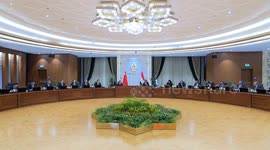
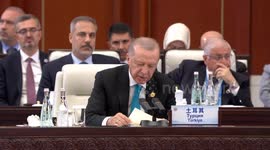
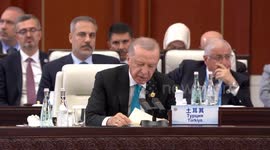
Storyline: Eighty years after the end of World War II (WWII), China has emerged from the ruins of conflicts as a steadfast champion of peace, justice and multilateral cooperation, carrying forward the very international order it helped establish after the war, said a CGTN commentary on Sunday. As this year marks the 80th anniversary of the victory in the Chinese People's War of Resistance Against Japanese Aggression, a crucial part of the World Anti-Fascist War, and the subsequent founding of the United Nations, the world is at another crucial juncture when it needs to reflect on the meaning of peace and take stock of the countries that have worked to preserve it. As a nation that contributed significantly to the victory against fascism and as one of the key forces in shaping the post-war international order, China has never wavered in its commitments to upholding the principles of the UN Charter. Together with other peace-loving nations, China has remained a staunch defender of fairness and justice within the UN framework, working to ensure its values reach all over the world. After the guns fell silent in World War II, waves of anti-colonial movements swept across Asia and Africa as former colonies and semi-colonies began their struggles for national independence. Founded in 1949, the People's Republic of China (PRC) became a strong advocate for these newly independent nations. At the historic Bandung Conference in Indonesia in 1955, China joined hands with other emerging nations, calling for unity against imperialism and for a world built on mutual respect. As Indian historian Vijay Prashad noted, this spirit of collaboration was vital, a recognition that only by standing together could newly independent countries overcome the legacies of exploitation and underdevelopment. "Firstly, they had to stand together if they were able to build a world of peace and development. Secondly, they understood that to build this world of peace and development, they needed to collaborate because most of these countries simply didn't have the resources to develop themselves. Their resources had been stolen from them. They didn't have the wealth; they didn't have the technology. When the British were finally thrown out of India, the literacy rate was only 12 percent. So, they needed each other to share skills, to share expertise, to have understanding, as they moved forward to build a new world. So, this unity at Bandung was really crucial," said Vijay Prashad, executive director of the Tricontinental: Institute for Social Research. This solidarity was reciprocated in 1971, when the PRC resumed its lawful seat at the United Nations with overwhelming support from Global South countries. It was not only a diplomatic victory for China, but also a milestone for emerging nations around the world, signaling a shift in the global balance of power. "What this country has gone through goes beyond description. What it has done for its people cannot be imagined in human history. And that day is the beginning of the world getting to know the China that we know," said Charles Liu, who witnessed the passing of the historic UN General Assembly Resolution 2758 at the UN Headquarters in New York 54 years ago. China's reform and opening-up, launched in 1978, further demonstrated its resolve to grow in partnership with the rest of the world. Since rejoining international institutions like the World Bank and the International Monetary Fund (IMF) in 1980 and the World Trade Organization (WTO) in 2001, China has emerged as a powerhouse of global economic growth and a steadfast advocate for multilateralism and free trade. WTO Director-General Ngozi Okonjo-Iweala praised China's role in the multilateral trading system, highlighting its remarkable success in lifting hundreds of millions out of poverty while significantly boosting global trade and development. "China is probably one of the poster children for the success of the multilateral trading system. Since they joined the World Trade Organization in 2001, China has done phenomenally well. Its per capita income has increased over 12 times; it's now the largest exporter in the world; it's the second largest importer. So, on all counts, China has done extremely well," said Okonjo-Iweala. China's engagement is not limited to economy. It has also played an active role in global governance and in shaping international norms. "China is a very active member of the international community, a very active member of our organization, of the International Monetary Fund. At the IMF, China has been a very engaged member of discussing the right policy choices, monetary policy, fiscal policy, financial sector policy," said IMF Managing Director Kristalina Georgieva. China's post-war journey, marked by its opposition to hegemony and commitment to development, reflects a deep dedication to a fair and cooperative international order. Guided by the principles of the UN Charter, China has continued to uphold the rights of developing countries and promote global cooperation, playing its role as a responsible major country. Today, China's vision has evolved to address 21st-century challenges. In response to the question of "what kind of world should be built and how to build it," China has put forward the concept of a community with a shared future for humanity. To tackle global development problems, address security dilemmas, and promote mutual learning among civilizations, China has introduced three global initiatives on development, security, and civilization, offering strong support for building a shared future for all humankind. Amid a new wave of global development, through platforms and mechanisms based on equality and mutual benefit, the global community is making new progress in this endeavor. Together with neighboring countries and fellow developing nations, China is embarking on a new journey of modernization, sharing its experience with other countries and helping to shape a future for global development. Eighty years on, the world is now standing at another crossroads. The very values once defended through great sacrifices are now facing renewed challenges. History has proven that lasting peace and progress can only be achieved through dialogue and multilateral cooperation. Having evolved from a nation of resisting aggression to a responsible global stakeholder, China has made its new-era promises clear: standing firmly on the right side of history, working tirelessly for peace, development and a shared future for all. The commitments, widely acknowledged by international voices, shine as a beacon of hope in today's uncertain world. Shotlist: FILE: Beijing, China - Date Unknown: 1. Various of Tian'anmen Rostrum, Chinese national flag FILE: Beijing, China - Sept 3, 2025: 2. V-Day military parade at Tian'anmen Square, guard of honor marching FILE: Beirut, Lebanon - February 2025: 3. Square, flags of Lebanon, UN, China; bilingual sign on wall reading "faithfully fulfilling the duty to safeguard the world peace" FILE: Beijing, China - Oct 1, 1949: 4. Various of celebrations marking founding ceremony of People's Republic of China (PRC) at Tiananmen Square FILE: Bandung, Indonesia - April 1955: 5. Various of Asian-African Conference (Bandung Conference) in progress, then Chinese Premier Zhou Enlai speaking India - Recent: 6. SOUNDBITE (English) Vijay Prashad, executive director, Tricontinental: Institute for Social Research (starting from shot 5/partially overlaid with shots 7-9/ending with shots 10-12) : "Firstly, they had to stand together if they were able to build a world of peace and development. Secondly, they understood that to build this world of peace and development, they needed to collaborate because most of these countries simply didn't have the resources to develop themselves. Their resources had been stolen from them. They didn't have the wealth; they didn't have the technology. When the British were finally thrown out of India, the literacy rate was only 12 percent. So, they needed each other to share skills, to share expertise, to have understanding, as they moved forward to build a new world. So, this unity at Bandung was really crucial." [SHOTS OVERLAYING SOUNDBITE] FILE: Beijing, China - Sept 25, 2019: 7. Various of documents, photos showing Chinese delegation attending Bandung Conference FILE: Jakarta, Indonesia - 2018: 8. Various of pedestrians FILE: New Delhi, India - Date Unknown: 9. India Gate, traffic [SHOTS OVERLAYING SOUNDBITE] FILE: New Delhi, India - Date Unknown: 10. India Gate, traffic 11. Street view, traffic FILE: Jakarta, Indonesia - Date Unknown: 12. Various of traffic FILE: UN Headquarters, New York City - October 25, 1971: 13. Various of United Nations General Assembly adopting Resolution 2758, attendees applauding FILE: UN Headquarters, New York City - Date Unknown: 14. UN logo China - Recent: 15. SOUNDBITE (English) Charles Liu, Witness to UNGA Resolution 2758 (starting with shot 14): "What this country has gone through goes beyond description. What it has done for its people cannot be imagined in human history. And that day is the beginning of the world getting to know the China that we know." FILE: China - Exact Date and Location Unknown: 16. Aerial shot of bridge, low-rise buildings FILE: Shhanghai, China - Date Unknown: 17. Aerial shot of cityscape, skyscrapers FILE: Geneva, Switzerland - Date Unknown: 18. WTO headquarters FILE: China - Exact Date and Location Unknown: 19. Aerial shots of containers 20. Freight train moving FILE: Tianjin Municipality, north China - June 27, 2023: 21. SOUNDBITE (English) Ngozi Okonjo-Iweala, director general, World Trade Organization (WTO) (starting with shot 20/partially overlaid with shot 22/ending with shot 23): "China is probably one of the poster children for the success of the multilateral trading system. Since they joined the World Trade Organization in 2001, China has done phenomenally well. Its per capita income has increased over 12 times; it's now the largest exporter in the world; it's the second largest importer. So, on all counts, China has done extremely well." [SHOT OVERLAYING SOUNDBITE] FILE: Chongqing Municipality, southwest China - Date Unknown: 22. Various of illuminated buildings, crowds [SHOT OVERLAYING SOUNDBITE] FILE: China - Exact Date and Location Unknown: 23. Aerial shot of traffic on overpass FILE: Beijing, China - March 24, 2024: 24. SOUNDBITE (English) Kristalina Georgieva, managing director, International Monetary Fund (starting with shot 23/ending with shots 25-27): "China is a very active member of the international community, a very active member of our organization, of the International Monetary Fund. At the IMF, China has been a very engaged member of discussing the right policy choices, monetary policy, fiscal policy, financial sector policy." FILE: Washington D.C., USA - 2015: 25. Various of logo of IMF FILE: Shhanghai, China - Date Unknown: 26. Aerial shots of cityscape FILE: UN Headquarters, New York City - July 24, 2024: 27. United Nations (UN) headquarters, national flags 28. UN flag FILE: Beijing, China - Date Unknown: 29. Aerial shot of Tian'anmen Rostrum 30. Doves flying [Restrictions: No access Chinese mainland]
Categories
From the blog
Stories not Stock: 3 Reasons Why You Should Use UGC Instead of Stock Video
Video content is an essential part of a brand’s marketing strategy, and while stock footage has been a reliable go-to in the past, forward-thinking companies are looking to user-generated content for their video needs.
View post