A Bundle is already in your cart
You can only have one active bundle against your account at one time.
If you wish to purchase a different bundle please remove the current bundle from your cart.
You have unused credits
You still have credits against a bundle for a different licence. Once all of your credits have been used you can purchase a newly licenced bundle.
If you wish to purchase a different bundle please use your existing credits or contact our support team.
02:09

China: China's targeted social policies deliver tangible gains in 2025

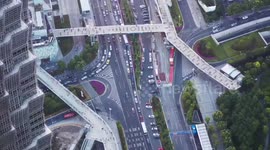
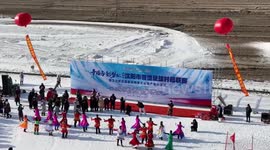
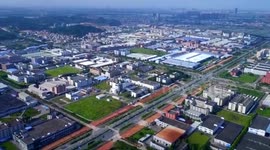
Storyline: From renovating old neighborhoods to expanding elderly care and boosting employment subsidies, China has reinforced its commitment to its people-first modernization policies with a series of measures aimed at solving the most pressing difficulties faced by the population in 2025. Throughout 2025, improvements in daily life have been visible in communities across the country, with over 25,000 old neighborhoods renovated, according to the Ministry of Housing and Urban-Rural Development. In urban communities and rural areas, 11,000 new assisted dining spots opened, offering 3 million elderly people affordable meals near their homes. More than 3,400 small-scale "pocket parks" were built across the country with over 19,000 hectares of new lawns opened to the public. In 2025, central government data shows increased financial support for public welfare, with the national budget for education rising by 6.1 percent, and the budget for social security and employment up by 5.9 percent. To support livelihoods, the central government says it allocated 66.74 billion yuan (about 9.45 billion U.S. dollars) in employment subsidies, focusing on large-scale vocational training for key industries and groups. A total of 11.42 million new jobs were created in China's cities between January and October, keeping the employment situation generally stable. In 2025, China has focused on combining "investment in people" with "investment in things", rolling out more financial resources to create a positive cycle involving economic development and improvements in people's livelihood. "This vividly reflects the sense of responsibility of the Central Committee of the Communist Party of China with Comrade Xi Jinping at its core in upholding the principle of putting the people first. This approach to resource allocation closely matches the most pressing and concrete interests of the people, while promoting mutual reinforcement between social security and socioeconomic development to achieve development that benefits the people and vice versa," said Liu Xu, director of the Social Development Institute at the Chinese Academy of Macroeconomic Research. Elderly care services have also been a focus of government efforts in 2025. In Changsha City, in central China's Hunan Province, a smart platform now connects seniors with over 1,100 providers to allow older residents to book a range of convenient services online. Young families are also being supported, with the country adding 660,000 inclusive childcare spots and introducing childcare subsidies. The policy to waive childcare and education fees for one year of preschool benefited approximately 12 million people by the fall semester this year. "Under the national policy, we can get a 500-yuan (about 70.8 U.S. dollars) reduction in tuition each month, which saves me about 5,000 yuan a year. I feel very satisfied and really happy," said Sun Fan, a resident of Lianyungang in east China's Jiangsu Province. Resources have also been channeled into quality education in regions with lower educational standards. In 2025, more than 1,000 public high schools have been newly built, renovated or expanded. Enrollment quotas for these schools have been increased for rural areas, while several provinces in central and western China have received additional higher-education resources. Healthcare services are also being adapted to ensure high-quality care is available closer to population centers. In more than 310 prefecture-level cities, over 200 types of medical tests and examinations are now available and 125 national regional medical centers have provided care to about 4 million patients through telemedicine, outreach consultations and paired assistance to bring high-quality medical services closer to local communities. Also, in 2025, support for vulnerable groups has also been strengthened. The central government arranged 156.68 billion yuan (about 22.18 billion U.S. dollars) in subsidies to guarantee basic living needs for people facing difficulties due to disasters or serious illness. In 2025, social security provision for more than 84 million people in new forms of employment has been steadily improved. Pilot programs for occupational injury insurance have also been expanded to 17 new provinces. Shotlist: FILE: China - Date and Exact Location Unknown: 1. Aerial shots of residential buildings 2. Various of elderly people gathering together 3. Children sitting in groups 4. Photo being taken of child held by woman 5. Aerial shots of cityscape; buildings 6. Various of students in class 7. People working in factory 8. People working in office 9. Aerial shot of people at job fair 10. Various of workers working, controlling machine 11. Various of people seeing doctor 12. People in hospital 13. Various of people working in factory 14. Pedestrians; buildings 15. Various of artistic performance in progress; onlookers 16. Robots; onlookers 17. Elderly people playing traditional Chinese instrument 18. Various of people doing exercise in park 19. Aerial shot of cityscape; buildings; traffic Beijing, China - Recent: 20. SOUNDBITE (Chinese) Liu Xu, director, Social Development Institute, Chinese Academy of Macroeconomic Research (starting with shot 19/ending with shots 21-26): "This vividly reflects the sense of responsibility of the Central Committee of the Communist Party of China with Comrade Xi Jinping at its core in upholding the principle of putting the people first. This approach to resource allocation closely matches the most pressing and concrete interests of the people, while promoting mutual reinforcement between social security and socioeconomic development to achieve development that benefits the people and vice versa." FILE: China - Date and Exact Location Unknown: 21. Aerial shot of houses 22. Pedestrians 23. Fruits being packed 24. Packages on conveyor 25. Various of social workers helping out in elderly people's home 26. People at service hall 27. Aerial shots of cityscape; traffic Changsha City, Hunan Province, central China - Recent: 28. Social welfare center building 29. Various of elderly people, staff member at center; health checking facilities 30. Mobile phone screen showing orders for meals 31. Elderly people being served food FILE: China - Date and Exact Location Unknown: 32. Aerial shot of buildings; traffic 33. Various of children at kindergarten Lianyungang City, Jiangsu Province, east China - Recent: 34. SOUNDBITE (Chinese) Sun Fan, resident (starting with shot 33): "Under the national policy, we can get a 500-yuan (about 70.8 U.S. dollars) reduction in tuition each month, which saves me about 5,000 yuan a year. I feel very satisfied and really happy." FILE: China - Date and Exact Location Unknown: 35. Aerial shot of buildings 36. Various of students in class 37. People working in lab 38. Men talking with each other 39. Mobile phone screen showing safety platform for deliveryman 40. Sign of injury protection service line 41. Various of deliverymen resting, having meal 42. Artistic performance in progress; onlookers 43. People applauding; national flag of China being waved 44. Aerial shot of scenery; national flag of China be held by people [Restrictions: No access Chinese mainland]
Categories
From the blog
Stories not Stock: 3 Reasons Why You Should Use UGC Instead of Stock Video
Video content is an essential part of a brand’s marketing strategy, and while stock footage has been a reliable go-to in the past, forward-thinking companies are looking to user-generated content for their video needs.
View post