A Bundle is already in your cart
You can only have one active bundle against your account at one time.
If you wish to purchase a different bundle please remove the current bundle from your cart.
You have unused credits
You still have credits against a bundle for a different licence. Once all of your credits have been used you can purchase a newly licenced bundle.
If you wish to purchase a different bundle please use your existing credits or contact our support team.
Appears in Newsflare picks
06:04

INTERVIEW - Risk of nuclear conflict ‘highest since depths of Cold War’: UN disarmament chief

SHOTLIST
DOHA, QATAR (DECEMBER 07, 2025) (ANADOLU-ACCESS ALL)
1. (SOUNDBITE) (English) UN UNDER-SECRETARY-GENERAL AND HIGH REPRESENTATIVE FOR DISARMAMENT AFFAIRS, IZUMI NAKAMITSU, SAYING:
“I'm afraid we are actually starting to see an arms race dynamics already. And what's driving that is obviously the major military powers competing with each other. The security considerations have shifted, especially since the Russian invasion of Ukraine. But the dynamics of the arms race actually had started before Ukraine. I think there has already been quite, you know, several years of investment in what we call the nuclear weapons modernization programs. I mean, all nuclear weapon states have been investing quite a lot of money in nuclear weapon systems. So I'm afraid the dynamics is definitely there, which is quite worrying. I think the risk of nuclear weapons actually being used in conflict is at the highest since the depths of the Cold War. And that's a really worrying thing. I mean, nuclear weapon states really need to understand that unless they exercise restraints, work on risk reduction measures and make sure that they prevent the use of nuclear weapons, I think we could actually end up in a very disastrous situation, so it's a very concerning situation.”
2. WHITE FLASH
3. (SOUNDBITE) (English) UN UNDER-SECRETARY-GENERAL AND HIGH REPRESENTATIVE FOR DISARMAMENT AFFAIRS, IZUMI NAKAMITSU, SAYING:
“It's probably a very difficult proposition to ask for the actual reduction of nuclear weapons at the moment, but disarmament doesn't only mean just a reduction of arsenals. So what we are proposing is that first and foremost exercise mutual restraints and start dialogues and transparency and confidence building measures, leading us all to first peaceful coexistence and then from there start real dialogues on how to start or restart arms control discussions and dialogues, build further confidence and create a pathway, if you will, return to nuclear disarmament discussions and negotiations. So not immediate reductions per se, but there are other variety of means in the disarmament toolbox that would lead us to pass back towards nuclear disarmament.”
4. WHITE FLASH
5. (SOUNDBITE) (English) UN UNDER-SECRETARY-GENERAL AND HIGH REPRESENTATIVE FOR DISARMAMENT AFFAIRS, IZUMI NAKAMITSU, SAYING:
“I think it's in everyone's interest to have risk reduction measures. Those risk reduction measures will include things like crisis communications, making sure that if there is a sign of escalation, there is good communication channels open to de-escalate so that it would not lead to an uncontrollable escalation. That's a very important risk reduction measure. This is in the interest of everyone, all nuclear weapon states and non-nuclear weapon states as well, because when it comes to nuclear weapons, it concerns everyone's security.”
6. WHITE FLASH
7. (SOUNDBITE) (English) UN UNDER-SECRETARY-GENERAL AND HIGH REPRESENTATIVE FOR DISARMAMENT AFFAIRS, IZUMI NAKAMITSU, SAYING:
“Yes, it has a profound impact. The multilateral international discussions are quite complex in the sense that it cannot be just a group of states engaged with each other, but across the board all states have to be involved in those conversations, you know, conflict and wars and violations of humanitarian principles in one region actually has an impact on all of the other issues, especially when Global South looks at these issues as a double standard, then the trust that is really required for multinational discussions and negotiations will be eroded. And that as a consequence will impact the critical multinational negotiations likely in the context of the NPT review conference. So we need to make sure that we stick to the principles, protect the norms that we have, protect the regimes like NPT that we have, because all these are foundational arrangements for multinational solutions in nuclear disarmament, some people called during mass session nuclear weapons order. We need to make sure that there is that order protected. Further erosion will be backfiring on everyone's security.”
8. WHITE FLASH
9. (SOUNDBITE) (English) UN UNDER-SECRETARY-GENERAL AND HIGH REPRESENTATIVE FOR DISARMAMENT AFFAIRS, IZUMI NAKAMITSU, SAYING:
“Right. Well, next year is really important because we have the review conference of the NPT. NPT is the critical pillar, I would say, of all the nuclear weapons-related regime. So, leaders have to really approach it as a top priority. They have to come to the NPT Review Conference with a shared interest to producing an outcome document. And for that, restraints, willingness to compromise, and find a common ground upon which we could build our negotiations in the Spring Review Conference. I think it is definitely in the interest of all nuclear weapon states and all of the other states' parties' interests. So diplomacy, reinvest in diplomacy dialogue and in the spirit of common interests that is international security for all of us.”
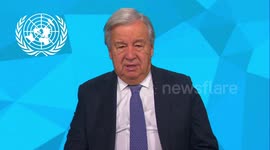
DOHA, QATAR - DECEMBER 07: The world is entering a new arms race fueled by intensifying great-power rivalry, and the threat of nuclear use has reached its most dangerous level in decades, the UN disarmament chief said.
In an interview with Anadolu on the sidelines of the Doha Forum, Izumi Nakamitsu, the UN under-secretary-general and high representative for disarmament affairs, said global security has sharply deteriorated as major powers expand and modernize their arsenals.
“I'm afraid we are actually starting to see an arms race dynamics already. And what's driving that is obviously, the major military powers competing with each other,” Nakamitsu said.
She emphasized that although the Russia-Ukraine war accelerated global insecurity, the trend began earlier as nuclear-armed states invested heavily in modernization.
The UN disarmament chief said: “The security considerations have shifted, especially since the Russian invasion of Ukraine. But this dynamics of arms race actually had started before Ukraine. I think there have already been quite several years of investment in what we call a nuclear weapons modernization programs.”
“I mean, all nuclear weapons states have been investing quite a lot of money in nuclear weapon systems. So, I'm afraid the dynamics is definitely there, which is quite worrying.”
She said: “I think the risk of nuclear weapons actually being used in conflict is at its highest since the depths of the Cold War.”
“Nuclear weapons states really need to understand that unless they exercise restraints, work on risk reduction measures and make sure that they prevent the use of nuclear weapons, I think we could actually end up in a very disastrous situation.”
- Disarmament: Possible only through dialogue
While acknowledging that nuclear reductions are unlikely in the near term, Nakamitsu stressed that disarmament goes far beyond cutting warhead numbers.
“It's probably a very difficult proposition to ask for the actual reduction of nuclear weapons at the moment. But disarmament doesn't only mean just a reduction of arsenals,” she said.
She outlined a phased approach – mutual restraint, transparency, confidence-building measures, and renewed dialogue – to rebuild the political space needed for arms-control agreements.
“Build further confidence and create a pathway, if you will, return to nuclear disarmament discussions and negotiations.
“So not immediately probably reductions per se, but there are other varieties of means in the disarmament toolbox that would lead us to a path back towards nuclear disarmament,” the UN disarmament chief said.
- How to lower nuclear risk now
Nakamitsu underscored the urgency of concrete risk-reduction steps amid rising tensions. “I think it's in everyone's interest to have risk reduction measures.”
This includes reliable crisis-communication channels to prevent escalation. “If there is a sign of escalation, there is good communication channels open to de-escalate so that it would not lead to an uncontrollable escalation,” she said, calling such systems “very important.”
“This is in the interest of everyone, all nuclear weapons states and non-nuclear weapons states as well, because when it comes to nuclear weapons, it concerns everyone's security.”
- Wars in Gaza and Ukraine eroding trust
Nakamitsu said the wars in Gaza and Ukraine have had “a profound impact” on global disarmament efforts.
"The multilateral international discussions are quite complex in the sense that they cannot be just a group of states engaged with each other. Across the board, all states have to be involved in those conversations.”
“Conflict and wars and violations of humanitarian principles in one region actually have an impact on all of the other issues, especially when the Global South looks at these issues as a double standard,” she said. “Then the trust that is really required for multilateral discussions and negotiations will be eroded.”
Nakamitsu warned that this erosion threatens key processes, including the Nuclear Non-Proliferation Treaty (NPT) review cycle.
“We need to make sure that there is that order protected. Further erosion will be backfiring on everyone's security," she said.
With the next NPT Review Conference set for 2026, Nakamitsu urged leaders to prioritize it diplomatically.
"Next year is really important because we have the review conference of the NPT," she said, stressing that the treaty is “the critical pillar… of all the nuclear weapons-related regime.”
She called on world leaders to approach the conference with a willingness to compromise.
Leaders must “come to the NPT review conference with shared interest to producing an outcome document,” Nakamitsu said, emphasizing the need for restraint and common ground.
“So diplomacy, reinvesting diplomacy, dialogue and in the spirit of common interests, that is international security for all of us," she said.
Categories
From the blog
Stories not Stock: 3 Reasons Why You Should Use UGC Instead of Stock Video
Video content is an essential part of a brand’s marketing strategy, and while stock footage has been a reliable go-to in the past, forward-thinking companies are looking to user-generated content for their video needs.
View post