A Bundle is already in your cart
You can only have one active bundle against your account at one time.
If you wish to purchase a different bundle please remove the current bundle from your cart.
You have unused credits
You still have credits against a bundle for a different licence. Once all of your credits have been used you can purchase a newly licenced bundle.
If you wish to purchase a different bundle please use your existing credits or contact our support team.
03:07

Japan: Japanese scholar's study on history of army school sheds light on imperial Japan's crimes during WWII

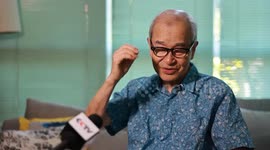
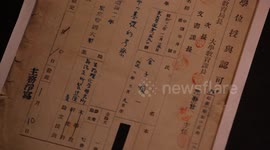
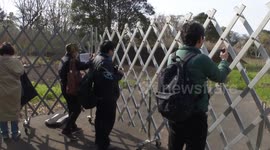
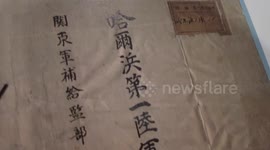
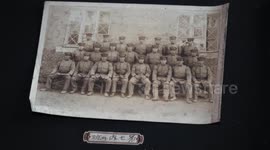
A Japanese scholar has spent more than three decades studying human bones discovered at the site of a wartime Japanese army medical school in Tokyo, using his discoveries to educate his countrymen about Japan's wartime aggression. Kazuyuki Kawamura, a scholar with expertise on Japanese germ warfare, used to be a ward councilor in Tokyo's Shinjuku district where, in 1989, a large number of human bones were found at the construction site for Japan's National Institute of Infectious Diseases. The site was previously home to a medical school and an epidemic prevention institute operated by the Imperial Japanese Army, and it was believed to have been the headquarters of Unit 731, the notorious Japanese germ warfare army during World War II. Three years after the initial discovery, a preliminary report on the discovery of the bones was published. After the initial report was released, Japan's Ministry of Health, Labour and Welfare opened its investigations which dragged on for years. Although it has been more than thirty years since he first decided to look more deeply into the story behind the bones, Kawamura has persisted on digging out the truth. Shotlist: Tokyo, Japan - Aug 5, 2025: 1. Various of old site of Japanese army medical school; 2. Pictures of human bones; 3. SOUNDBITE (Japanese) Kazuyuki Kawamura, scholar in Japanese germ warfare (partially overlaid with shot 4): "From this report we learned that these human bones were specimens from the former Army Medical School. The report concludes with this: 'Traces of human manipulation, such as drilling, sawing, and crushing, were found in more than a dozen skulls. It is speculated that these operations were performed on the heads of the corpses after they had been severed from the neck.'"; [SHOT OVERLAYING SOUNDBITE] 4. Contents in report; [SHOT OVERLAYING SOUNDBITE] 5. Various of Kawamura talking with reporter; 6. SOUNDBITE (Japanese) Kazuyuki Kawamura, scholar in Japanese germ warfare: "The Ministry of Health, Labor and Welfare delayed releasing its report for about ten years, and another twenty years before finally releasing the contents of the 1993 questionnaire. These years represent a significant delay."; 7. Various of Kawamura talking with reporter, pointing at altered information; 8. SOUNDBITE (Japanese) Kazuyuki Kawamura, scholar in Japanese germ warfare (partially overlaid with shot 9): "The blacked-out sections were redacted by the Ministry of Health, Labor and Welfare, meaning they were not to be shared with the public. However, after investigating, I learned the contents of the blacked-out sections: 'In the summer of 1940, a formalin-soaked human head was delivered from Harbin in an iron barrel. We participated in the removal and remember vomiting.' 1940 was the year Unit 731 was officially established. Therefore, the 'formalin-soaked human head' delivered from Harbin in the summer of 1940 could not have been the work of any unit other than Unit 731."; [SHOT OVERLAYING SOUNDBITE] 9. Report; [SHOT OVERLAYING SOUNDBITE] 10. Various of documents. [Restriction - No access Chinese mainland]
Categories
From the blog
Stories not Stock: 3 Reasons Why You Should Use UGC Instead of Stock Video
Video content is an essential part of a brand’s marketing strategy, and while stock footage has been a reliable go-to in the past, forward-thinking companies are looking to user-generated content for their video needs.
View post