A Bundle is already in your cart
You can only have one active bundle against your account at one time.
If you wish to purchase a different bundle please remove the current bundle from your cart.
You have unused credits
You still have credits against a bundle for a different licence. Once all of your credits have been used you can purchase a newly licenced bundle.
If you wish to purchase a different bundle please use your existing credits or contact our support team.
00:56

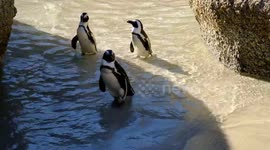
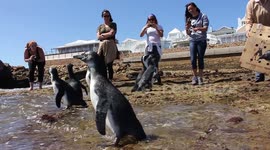
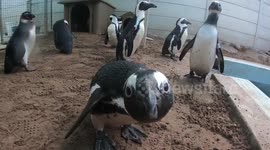
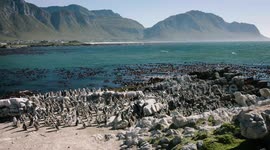
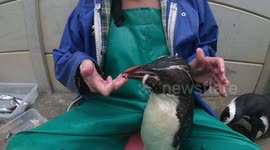
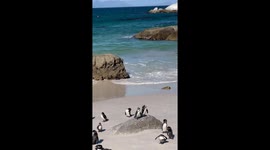
South Africa: Critically Endangered African Penguins Battle Fishing Fleets For Food

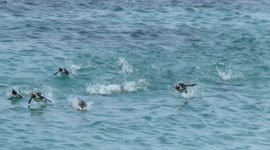
South Africa - November 17, 2025 A new study led by the University of St Andrews has found that Critically Endangered African penguins (Spheniscus demersus) are much more likely to forage in the same areas as commercial fishing vessels when fish are scarce, intensifying competition for food for a species already in crisis. Published on 17 November in the Journal of Applied Ecology, the research introduces a new metric called “overlap intensity,” which measures not only where penguins and fishing boats share space, but how many penguins are affected by that overlap. The African penguin population has fallen by nearly 80% over the past 30 years, partly because of competition with a local purse-seine fishery targeting sardines and anchovies, key prey for the birds. A purse seine is a large net that surrounds schools of fish. Lead author Dr Jacqueline Glencross from the Scottish Oceans Institute at the University of St Andrews said: “We wanted a better way to assess how many penguins are potentially impacted when fisheries operate nearby — not just where the overlap occurs.” Using tracking data from penguins on Robben and Dassen Island, researchers from the University of Exeter, the South African Department of Forestry, Fisheries and the Environment, and BirdLife South Africa found a sharp increase in overlap during low-food years. In 2016, a year with low fish biomass, about 20% of penguins foraged in the same areas as active fishing vessels, compared with just 4% in years with healthier fish stocks. The results indicate that competition between fisheries and penguins intensifies when prey is scarce, posing the greatest danger during sensitive periods such as chick-rearing, when adults must find food efficiently to feed their young. By quantifying overlap intensity at the population level, the study offers a powerful tool for assessing ecological risk and guiding ecosystem-based fishery management. It also supports the design of dynamic marine protected areas that can respond to real-time changes in predator-prey relationships. The African penguin recently featured in a landmark South African court case challenging the lack of biologically meaningful fishery closures near breeding colonies. Earlier this year, conservation and fishing industry groups reached a high court settlement on the need for closures near penguin colonies. In response, the South African government reinstated more biologically meaningful no-fishing zones around Robben Island, one of the key colonies in the study. Dr Glencross said: “This research highlights why those closures are necessary. Previously unprotected areas with high overlap intensity are where the penguins were most at risk.”
Categories
From the blog
Stories not Stock: 3 Reasons Why You Should Use UGC Instead of Stock Video
Video content is an essential part of a brand’s marketing strategy, and while stock footage has been a reliable go-to in the past, forward-thinking companies are looking to user-generated content for their video needs.
View post