A Bundle is already in your cart
You can only have one active bundle against your account at one time.
If you wish to purchase a different bundle please remove the current bundle from your cart.
You have unused credits
You still have credits against a bundle for a different licence. Once all of your credits have been used you can purchase a newly licenced bundle.
If you wish to purchase a different bundle please use your existing credits or contact our support team.
02:07

Lebanon: Tensions heightens in Lebanon as gov't demands disarmament of Hezbollah

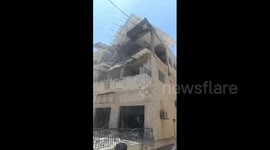
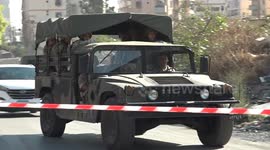
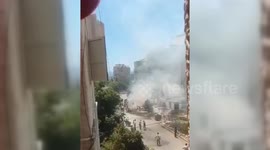
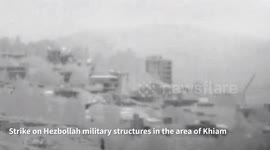
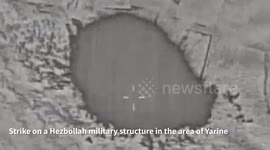
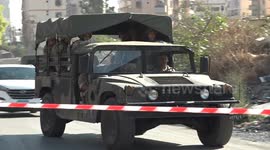
Shotlist Lebanon - Recent (CGTN - No access Chinese mainland) 1. Various of mountains, buildings 2. Various of destroyed buildings 3. SOUNDBITE (Arabic, dubbed in English) resident (name not given): "The problem is fear of the Israeli enemy, who is lying in wait for the people of the south, and also, the situation on the eastern border is not reassuring. In light of this situation, you cannot ask anyone to hand over their weapons." 4. Various of mountains, buildings 5. SOUNDBITE (Arabic, dubbed in English) Johnny Mnayar, political writer (name not given): "In southern Litani, cooperation with Hezbollah was not based on Hezbollah handing over its positions to the army, but rather on its non-interference. Hezbollah has said that it does not want anyone to approach its positions, even those from which it bombs in northern Litani." 6. National flag of Lebanon 7. Various of traffic, buildings 8. SOUNDBITE (Arabic, dubbed in English) Munir Shehadeh, retired colonel, Lebanese Army (ending with shot 9): "There will be absolutely no clash between the Lebanese Army and the resistance. It is pressure from America on Lebanon to walk on the edge of the precipice. But I believe that when we reach a certain point, when we reach a certain stage of events in the streets, America will reconsider its calculations and there will be a solution." 9. Various of national flag of Lebanon, traffic, buildings Storyline Tensions have heightened again in Lebanon as the Lebanese government demanded disarmament of Hezbollah north of the Litani River , a central issue in political and security debates amid fears of internal conflict and regional pressures. Lebanese President Joseph Aoun says the army has secured the south and will continue to bring all arms in the country under state control -- a move Hezbollah has opposed. Aoun stressed in a speech on Tuesday that the army has secured the south, removing "illegal weapons" over the past 10 months, and insisted border authority remain solely with the armed forces to avoid external entanglements. Meanwhile, residents in the south continue to endure the strain of political uncertainty and security challenges. Residents say they fear the escalating Israeli strikes and internal divisions will deepen instability in the country. "The problem is fear of the Israeli enemy, who is lying in wait for the people of the south, and also, the situation on the eastern border is not reassuring. In light of this situation, you cannot ask anyone to hand over their weapons," said a resident in southern Lebanon. Political writer Johnny Mnayar believes that a clash between Hezbollah and the Lebanese army is possible but not inevitable, based on the situation on the ground and pressure from Israel and the United States. "In southern Litani, cooperation with Hezbollah was not based on Hezbollah handing over its positions to the army, but rather on its non-interference. Hezbollah has said that it does not want anyone to approach its positions, even those from which it bombs in northern Litani," he said. Despite the current crisis between the Lebanese rebel group and the army and government over the disarmament issue in the north of the Litani River, experts assert that there is no conflict between Hezbollah and the Lebanese Army. "There will be absolutely no clash between the Lebanese Army and the resistance. It is pressure from America on Lebanon to walk on the edge of the precipice. But I believe that when we reach a certain point, when we reach a certain stage of events in the streets, America will reconsider its calculations and there will be a solution," said Munir Shehadeh, a retired colonel of the Lebanese Army. The Lebanese Ministry of Health said Wednesday that 19 people, including journalists, were injured in Israeli strikes targeting buildings in five villages in southern Lebanon, north of Litani, which were described as the most violent strikes since the ceasefire was reached in November in 2025. President Aoun condemned the strikes, holding Israel responsible, and called on the international community to stop the violations.
Categories
From the blog
Stories not Stock: 3 Reasons Why You Should Use UGC Instead of Stock Video
Video content is an essential part of a brand’s marketing strategy, and while stock footage has been a reliable go-to in the past, forward-thinking companies are looking to user-generated content for their video needs.
View post