A Bundle is already in your cart
You can only have one active bundle against your account at one time.
If you wish to purchase a different bundle please remove the current bundle from your cart.
You have unused credits
You still have credits against a bundle for a different licence. Once all of your credits have been used you can purchase a newly licenced bundle.
If you wish to purchase a different bundle please use your existing credits or contact our support team.
01:26

China: Innovative solar project integrates with greening efforts for desert control in Xinjiang

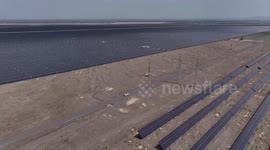
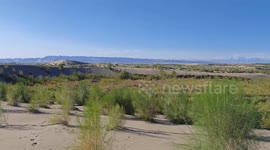
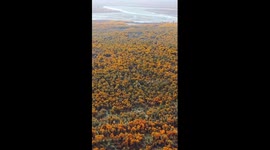
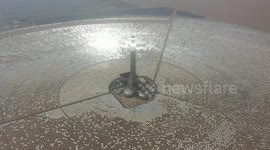
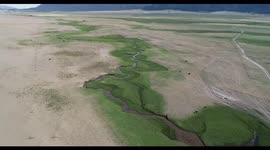
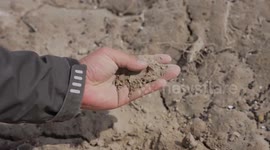
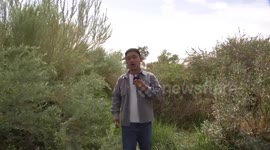
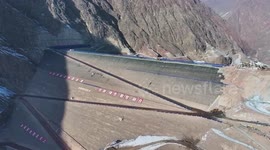
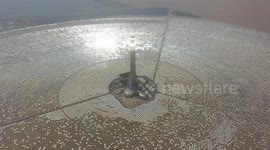
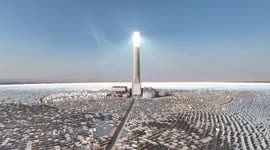
An innovative anti-desertification project that integrates solar power generation with greening efforts has restored life to the dead zones of sand in Lop County, located on the edge of the Taklamakan Desert in northwest China's Xinjiang Uygur Autonomous Region. This year, a new solar power land restoration model has taken root in the county, where a sea of blue solar panels now stretches across the dunes, blanketing the once-barren sands. The 500,000-kilowatt photovoltaic power station in the county is part of a larger solar power desert control initiative along the Taklimakan Desert, serving as a key component of the sand-blocking green belt project. It was officially connected to the power grid in May this year. "We elevated the solar panel components to about 1.5 to 1.7 meters high, with spacing of 12 meters between two support piles. This allows for large-scale mechanized operations once the solar power generation system is in place and followed up by biological desertification control efforts. For example, these are oats we grew, and they're about 15 to 20 centimeters tall. Following the completion of the solar power plant, we've planted more than a dozen types of crops. We want to develop a mature, replicable, and sustainable model for desert control," said Yang Jian, head of the Lop 500,000-kW solar power desert control station under the China General Nuclear Power Corporation. In addition to planting sand-fixing plants beneath the panels, the project has cultivated vast green areas among the dunes, visibly turning the desert into grassland. "Here are about 133 hectares of alfalfa. After each harvest, the remaining stubble decompose into organic material. Alfalfa roots grow deep, anchoring the sand and preventing further desertification," said Yang. The Taklimakan Desert sand-blocking green belt project in Xinjiang, which celebrated its first anniversary on Friday, has effectively protected surrounding oases, farmland and grasslands by curbing desert expansion, with sand sources now under control. The 3,046-kilometer green ecological barrier -- the world's longest of its kind -- encircles China's largest desert like a "green scarf" to control sand diffusion. This project was globally recognized last month when it was listed among the "2025 Top 10 Global Engineering Achievements" by the World Federation of Engineering Organizations (WFEO). Over the past year, 21 key counties and cities along the desert edge have expanded the barrier by about 593,400 hectares, increasing its width by 110 meters to 7,500 meters. Infrastructure such as water supply, electricity and roads has been steadily improved, supporting the barrier's growth and sustainability. SHOTLIST: Lop County, Hotan Prefecture, Xinjiang Uygur Autonomous Region, northwest China - Recent 1. Aerial shot of solar farm; 2. Solar panel coverage area comparison between 2024 and 2025; 3. Various of solar panels; 4. Plants growing between support piles of solar panels; 5. Aerial shot of solar panels; 6. SOUNDBITE (Chinese) Yang Jian, head, Lop 500,000-kW solar power desert control station, China General Nuclear Power Corporation (starting with shots 4-5/ending with shots 7-10): "We elevated the solar panel components to about 1.5 to 1.7 meters high, with spacing of 12 meters between two support piles. This allows for large-scale mechanized operations once the solar power generation system is in place and followed up by biological desertification control efforts. For example, these are oats we grew, and they're about 15 to 20 centimeters tall. Following the completion of the solar power plant, we've planted more than a dozen types of crops. We want to develop a mature, replicable, and sustainable model for desert control."; 7. Aerial shots of solar panels, plants; 8. Various of Yang showing height of oat plants; 9. Interview in progress; 10. Various of plants, solar panels; 11. Aerial shots of solar farm, field of Alfalfa; 12. Yang showing organic material formed from alfalfa stubble; 13. SOUNDBITE (Chinese) Yang Jian, head, Lop 500,000-kW solar power desert control station, China General Nuclear Power Corporation (starting with shots 11-12/ending with shot 14): "Here are about 133 hectares of alfalfa. After each harvest, the remaining stubble decompose into organic material. Alfalfa roots grow deep, anchoring the sand and preventing further desertification."; 14. Various of Alfalfa plants; 15. Aerial shot of desert control efforts underway; 16. Aerial shot of vast stretch of land; 17. Aerial shots of solar farm, plants. [Restrictions: No access Chinese mainland]
Categories
From the blog
Stories not Stock: 3 Reasons Why You Should Use UGC Instead of Stock Video
Video content is an essential part of a brand’s marketing strategy, and while stock footage has been a reliable go-to in the past, forward-thinking companies are looking to user-generated content for their video needs.
View post