A Bundle is already in your cart
You can only have one active bundle against your account at one time.
If you wish to purchase a different bundle please remove the current bundle from your cart.
You have unused credits
You still have credits against a bundle for a different licence. Once all of your credits have been used you can purchase a newly licenced bundle.
If you wish to purchase a different bundle please use your existing credits or contact our support team.
Appears in Newsflare picks
07:37

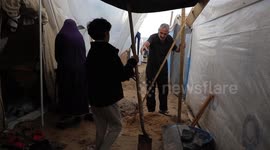
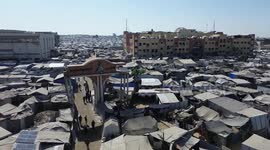
Nowhere to return: Displaced Gazans face perilous future in makeshift tent city

SHOTLIST
DEIR AL-BALAH, GAZA STRIP, PALESTINE (OCTOBER 26, 2025) (ANADOLU-ACCESS ALL)
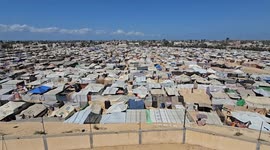
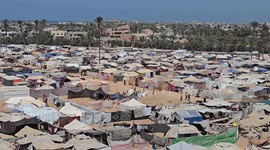
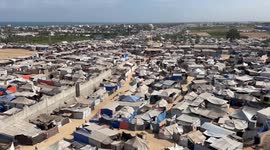
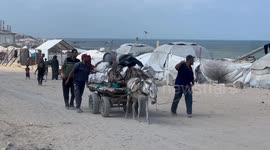
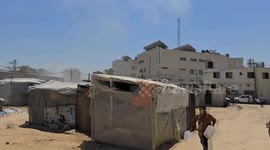
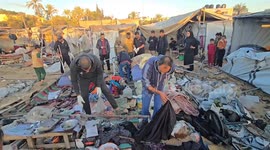
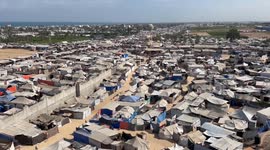
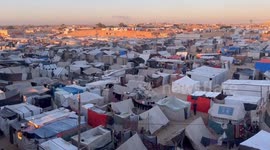
1. VARIOUS WIDE SHOTS OF DISPLACEMENT CAMP WITH MAKESHIFT TENTS
2. TRACTOR CARRYING WATER TANKS ON CARRIAGE IN CAMP
3. VARIOUS OF CHILDREN AND WOMEN OUTSIDE TENTS
4. TIGHT SHOT OF CHILD WITH BLOND HAIR SITTING OUTSIDE TENT
5. WIDE SHOT OF WOMAN AND CHILDREN OUTSIDE TENT
6. BOY TRYING TO FLY PAPER KITE AMONG TENTS
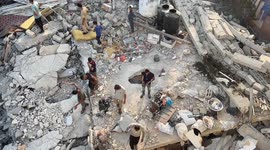
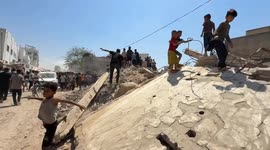
7. VARIOUS OF PEOPLE, INCLUDING CHILDREN, AMONG TENTS ON RUBBLE
8. (SOUNDBITE) (Arabic) DISPLACED PALESTINIAN, RAND ZAID ALMASRI, SAYING:
“We have little children — they are all sick. We have nothing to wear, nothing to cover ourselves with, nothing to sleep on. They told us to stay in tents, but there’s nothing ready, and they said it might rain on Thursday. If it rains, what will we do? My son is injured, my other son is injured — all my children are hurt. We are suffering so much. We have no help, nothing. I don’t know what to do.”
9. VARIOUS OF RAND ZAID ALMASRI SHOWING HER TENT AND SPEAKING
10. VARIOUS OF BOY CROUCHING OUTSIDE TENT, ROASTING GRAIN ON PAN
11. (SOUNDBITE) (Arabic) DISPLACED PALESTINIAN MAN, AYMAN WESHAH, SAYING:
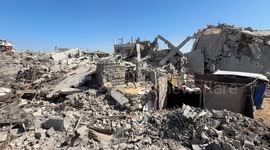
“We don’t have any money. My brother and I are living in ruins — everything is destroyed. There’s no way to live, no life, nothing. The road is closed, and we’re afraid to go anywhere. If we go, there’s shelling — they say when people try to move, two or three get killed on the way. So, how can we go? Over there, everything is open, but there’s no water, no life, nothing to rely on. So we’re waiting here until the road opens, and we pray that when we leave, it will be in peace, Allah willing. I’ve looked at the destroyed houses — there’s nothing left to fix, nothing left at all. I have nothing: no blankets, no clothes, no food, no drink. What should I do? Where should I go? There’s no rent, no way, no road — nothing.”
12. WHITE FLASH
13. (SOUNDBITE) (Arabic) DISPLACED PALESTINIAN MAN, AYMAN WESHAH, SAYING:
“Everything else was destroyed — all the houses; many homes were burned. I had to throw things out into the street.”
14. WHITE FLASH
15. (SOUNDBITE) (Arabic) DISPLACED PALESTINIAN MAN, AYMAN WESHAH, SAYING:
"I’m afraid the war will come back. They say this isn’t something to wish on the Jews — that people wish the war on the Jews. This tent — honestly, even cattle couldn’t live in it. I’m pleading: I need a tent and I need money so I can go. That’s what I want — a place in the Zaatra hills, in the camp; I want to go there, I’m not asking for anything else. But the road is always closed, so I can’t get there."
16. VARIOUS OF CHILDREN OUTSIDE TENTS
17. (SOUNDBITE) (Arabic) DISPLACED PALESTINIAN WOMAN, MURUWAT NEJJAN, SAYING:
“The first thing is — we didn’t return to Gaza City because the whole area there is destroyed, especially east of the Baraka area. That place became a military zone, so we didn’t go back. There’s no water there, no life. Additionally, mosquitoes are everywhere, and everyone is suffering. Here, even though we’re living in tents on sand, it’s still better than the north of the Strip.”
18. WHITE FLASH
19. (SOUNDBITE) (Arabic) DISPLACED PALESTINIAN WOMAN, MURUWAT NEJJAN, SAYING:
“We’ve basically settled here because we had no choice. We thought about going back to Gaza, but even if we did, we’d just be displaced again, and then the Israelis would push us out once more. So we said staying here is much better. We arrived at this place after six days in the street — we were literally living outside.”
20. WHITE FLASH
21. (SOUNDBITE) (Arabic) DISPLACED PALESTINIAN WOMAN, MURUWAT NEJJAN, SAYING:
“The situation is tough — life is hard there in the north. I prefer here a lot because, first of all, it’s safer. Half of us are here in eastern al-Bureij, but the north is much worse. We went out under fire. I went to get a few things from east of the Baraka area, under fire, with drones above us. When we arrived, a lot of the houses were already destroyed. There were gunshots, and much of the area was ruined. Thank Allah, we managed to take a few essential things.”
22. WHITE FLASH
23. (SOUNDBITE) (Arabic) DISPLACED PALESTINIAN WOMAN, MURUWAT NEJJAN, SAYING:
“Currently, this camp has around 500 families. About ten families left because they were afraid, first of all, afraid the war would return. Then, when they went back, they found their houses completely destroyed. Those who left had nothing; even if they returned, there was no shelter for them. The rest stayed here because there are no houses, no life, nothing, and no basic resources to live anywhere else.”
24. WHITE FLASH
25. (SOUNDBITE) (Arabic) DISPLACED PALESTINIAN WOMAN, MURUWAT NEJJAN, SAYING:
“We are very afraid of the sounds of war and shelling, and we understand what that means. Here, at least in the camp, it’s safer, but we are still very afraid — afraid of the war, afraid of the shelling, and very afraid of the rockets.”
26. WIDE SHOT OF MEN STANDING NEAR TENTS, TALKING
27. LAUNDRY HANGING ON ROPE OUTSIDE TENT, VEHICLE PARKED OUTSIDE TENT (2 SHOTS)
DEIR AL-BALAH, GAZA STRIP, PALESTINE - OCTOBER 26: Hundreds of Palestinian families, displaced by Israeli attacks on the Gaza Strip, are facing a daily struggle for survival in one of the largest tent camps in Deir al-Balah, with residents reporting severe shortages of necessities and the spread of diseases.
Palestinians in the camp accuse Israel of blocking sufficient humanitarian aid from entering the region, exacerbating a crisis marked by a lack of clean water, food, and adequate shelter.
"We have little children — they are all sick. We have nothing to wear, nothing to cover ourselves with, nothing to sleep on," said Randa Zaid al-Masri, a resident who was forced to flee her home in Beit Hanoun in northern Gaza during raids by Israeli soldiers.
“We are suffering so much. We have no help, nothing. I don’t know what to do."
Another displaced person, Ayman Weshah, described living in ruins with his brother. "Everything is destroyed. There’s no way to live, no life, nothing," he said.
Weshah expressed fear of movement due to ongoing shelling. "The road is closed, and we’re afraid to go anywhere... they say when people try to move, two or three get killed on the way. So how can we go?"
He lamented the complete loss of his possessions and home. "I’ve looked at the destroyed houses — there’s nothing left to fix, nothing left at all. I have nothing: no blankets, no clothes, no food, no drink. What should I do? Where should I go?"
“This tent — honestly, even cattle couldn’t live in it. I’m pleading: I need a tent and I need money so I can go. That’s what I want — a place in the Zaatra hills, in the camp; I want to go there,” he added.
Muruwat Nejjan, another camp resident, explained that many families cannot return to their homes in the north, which have been completely devastated.
"We didn’t return to Gaza City because the whole area there is destroyed," Nejjan said. "That place became a military zone, so we didn’t go back. There’s no water there, no life."
Nejjan stated that despite the difficult conditions in the Deir al-Balah camp, it was a safer alternative to the north. "We went out under fire. I went to get a few things from east of the Baraka area, under fire, with drones above us. When we arrived, a lot of the houses were already destroyed. There were gunshots, and much of the area was ruined."
She reported that the camp currently houses approximately 500 families, with few having anywhere else to go. "The rest stayed here because there are no houses, no life, nothing, and no basic resources to live anywhere else. We are very afraid of the sounds of war and shelling."
The humanitarian crisis follows the attacks Israel launched on the Gaza Strip in October 2023. The ongoing conflict has reduced much of the territory, which has a population of 2.3 million and has been under a blockade since 2006, to rubble.
According to Palestinian authorities, Israel’s military offensive has killed over 68,500 people and injured more than 170,300 others since October 2023.
A ceasefire deal, which took effect on Oct. 10, includes the release of Israeli hostages in exchange for nearly 2,000 Palestinian prisoners. The plan also envisages the rebuilding of Gaza and the establishment of a new governing mechanism without Hamas.
Writing by Sibel Uygun
Categories
From the blog
Stories not Stock: 3 Reasons Why You Should Use UGC Instead of Stock Video
Video content is an essential part of a brand’s marketing strategy, and while stock footage has been a reliable go-to in the past, forward-thinking companies are looking to user-generated content for their video needs.
View post