A Bundle is already in your cart
You can only have one active bundle against your account at one time.
If you wish to purchase a different bundle please remove the current bundle from your cart.
You have unused credits
You still have credits against a bundle for a different licence. Once all of your credits have been used you can purchase a newly licenced bundle.
If you wish to purchase a different bundle please use your existing credits or contact our support team.
04:28

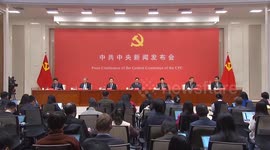
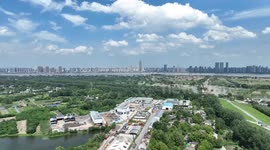
China: Shanghai spearheads sci-tech innovation synergy across Yangtze River Delta

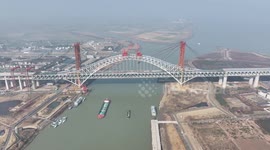
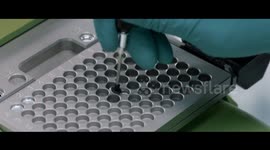
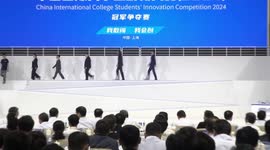
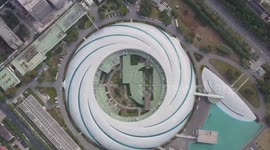
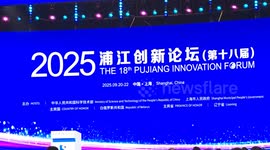
Storyline Shanghai spearheads sci-tech innovation synergy across Yangtze River Delta [Voice_over] From above, Shanghai’s Zhangjiang Science City comes into view. At its heart stands the Shanghai Synchrotron Radiation Facility ... one of China’s major scientific installations. Since becoming operational in 2009, it has supported more than 20,000 experimental projects. In the first eleven months of this year alone, nearly half of its workers came from the Yangtze River Delta. Zhangjiang is both the starting point of Shanghai’s innovation drive, and a snapshot of China’s rising scientific strength. As early as 2007, President Xi, who at the time was Shanghai’s Party chief, called for national-level science projects like Zhangjiang Science City to better serve China’s strategic needs. [Sound_bite] Zhao Zhentang, Academician, Chinese Academy of Engineering: "At the time, our main focus was simply to make the project work well, to ensure the engineering itself succeeded. But Xi Jinping stressed that projects like the Shanghai Synchrotron should serve national strategies. That message reflected a far-reaching strategic vision." [Voice_over] Since the 18th Communist Party of China National Congress, President Xi has made multiple inspection visits to Shanghai. In 2014, he called on the city to move faster toward becoming a science and innovation center with global influence. After the Yangtze River Delta integration was elevated to a national strategy in 2018, Xi repeatedly emphasized that Shanghai and the region must not only deliver quality products, but also high-level technological supply to support national development. He urged cross-regional coordination, stronger resource integration, and joint innovation. In short, President Xi outlined a roadmap for Shanghai to lead the development of China's new productive forces. [Sound_bite] Liu Qing, Director, National Innovation Center par Excellence (NICE): "These instructions clearly define Shanghai’s mission. The city must strengthen its own innovation engine, while also leading and empowering the entire Yangtze River Delta. It shows the president’s strategic thinking, placing Shanghai within both national development and global competition." [Voice_over] Today, Zhangjiang Science City hosts one listed company per square kilometer. Half of the world’s top 20 pharmaceutical firms have set up innovation centers here. Over 40 percent of China’s top 100 pharmaceutical companies are also based in the area. Shanghai now has 20 major scientific infrastructure projects either built, under construction, or planned. In the first half of this year, one out of every three papers published in top international journals nationwide came from Shanghai. The city is home to more than 25,000 high-tech firms, while an average of 320 tech companies are founded every day. Its three leading industries - integrated circuits, biomedicine, and artificial intelligence - employ over 800,000 professionals. Beyond the city, innovation is spreading across the region. The G60 Science and Innovation Corridor links multiple provinces, and the Lingang aircraft industry cluster connects suppliers within a three-hour high-speed rail radius. Joint innovation mechanisms are expanding. More than 56,000 large scientific instruments are now shared across the region, and hundreds of universities, research institutes, and leading enterprises are part of collaborative networks. The World Intellectual Property Organization’s 2025 Global Innovation Index ranked Shanghai-Suzhou sixth among global innovation clusters. [Sound_bite] Luo Dajin, Director, Science and Technology Commission of Shanghai Municipality: "We will follow the guidance of President Xi. We aim to build a world-class innovation source, together with Jiangsu, Zhejiang, and Anhui. We will align strategy, policies, and resources to deepen the integration of technological and industrial innovation, which will strengthen China’s path to becoming a science and technology powerhouse." [Voice_over] At a recent Central Economic Work Conference, China announced plans to expand Shanghai’s international innovation center role across the entire Yangtze River Delta. A new regional law on coordinated science and innovation development took effect in September, marking a shift from policy coordination to institutionalized cooperation. As Shanghai leads, the Yangtze River Delta is emerging as a unified force that is driving China’s next stage of high-quality growth. [Restrictions: No access Chinese mainland]
Categories
From the blog
Stories not Stock: 3 Reasons Why You Should Use UGC Instead of Stock Video
Video content is an essential part of a brand’s marketing strategy, and while stock footage has been a reliable go-to in the past, forward-thinking companies are looking to user-generated content for their video needs.
View post