A Bundle is already in your cart
You can only have one active bundle against your account at one time.
If you wish to purchase a different bundle please remove the current bundle from your cart.
You have unused credits
You still have credits against a bundle for a different licence. Once all of your credits have been used you can purchase a newly licenced bundle.
If you wish to purchase a different bundle please use your existing credits or contact our support team.
02:51

China: Global brands taking root in China's lower-tier cities

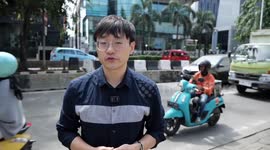
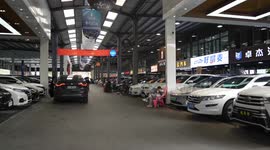
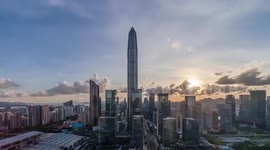
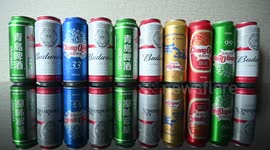
Storyline Global brands taking root in China's lower-tier cities [Voice_over] In China's megacities, global brands are a physical reality. You walk in, you touch, you try. The transaction is immediate. But for global brands eyeing growth, this familiar battlefield is only half the story. The real frontier lies here - in the thousands of counties and smaller cities that dot China's vast landscape. For a brand, the question is no longer if to be here, but how to win here. [Sound_bite] Wei Xiuyun, Store Manager, Skechers Langfang Wanda Plaza Store: "We have been here for about 6 years now. Business has been great, especially when certain styles go viral online. Those shoes fly off the shelves." [Voice_over] It's clear the desire for global brands has arrived in more and more smaller cities and counties. But for these brands, this offline surge isn't just about responding to viral trends - it's about meeting a deeper, more fundamental demand. [Sound_bite] Liz Zheng, Senior Vice President, Online Business & Operations Management, Skechers China: "Across China, we operate nearly 4,000 stores, with a distribution network that extends beyond tier-one and tier-two cities into tier-three and lower-tier markets. Consumers in these areas from provincial cities to small county towns - increasingly seek the same international brands they discover online and on social media. Supported by advances in on-demand retail, new retail formats, and e-commerce, we continuously assess and optimize our logistics framework. It is essential that our supply chain remains robust and agile enough to fuel expansion into these growing markets." [Voice_over] And this shift isn't confined to malls. It's rewriting the most routine stops of all. Take a walk down the main street now, and the classic local convenience store has been reimagined. While more and more global brands are opening physical stores in smaller cities, some brands are choosing to connect with these consumers in a different way. Not every international brand has a physical presence in county towns, but thanks to the rise of e-commerce and fast delivery systems, they can still cater to local demand. [Sound_bite] Qin Ruohan, Lecturer in Economics, University of Cambridge: "For a long time, the presence of global brands in China was largely confined to first-tier cities, where income levels and retail infrastructure could support them. What has changed in recent years is not simply consumer demand, but the underlying market structure. The rapid expansion of e-commerce platforms, together with major improvements in logistics, has significantly reduced the cost of market access. As a result, international brands can now reach consumers in smaller cities and counties without relying on physical stores." [Voice_over] From an economic perspective, this represents a shift in how retail networks are organised, with lower-tier cities now forming an integral part of China's national and global retail system. And for consumers from Beijing to Langfang, the world is now just next door. [Restrictions: No access Chinese mainland]
Categories
From the blog
Stories not Stock: 3 Reasons Why You Should Use UGC Instead of Stock Video
Video content is an essential part of a brand’s marketing strategy, and while stock footage has been a reliable go-to in the past, forward-thinking companies are looking to user-generated content for their video needs.
View post