A Bundle is already in your cart
You can only have one active bundle against your account at one time.
If you wish to purchase a different bundle please remove the current bundle from your cart.
You have unused credits
You still have credits against a bundle for a different licence. Once all of your credits have been used you can purchase a newly licenced bundle.
If you wish to purchase a different bundle please use your existing credits or contact our support team.
03:37

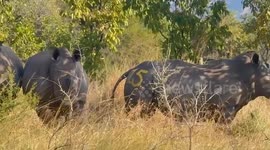
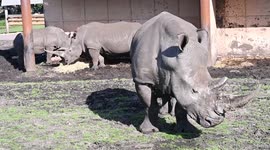
Wildlife conservation milestone as two hand-raised one-horned rhino calves return home to Kaziranga National Park

In a significant boost to wildlife conservation efforts 2 hand-raised one-horned rhinoceros calves named Chandra and Kanai were successfully moved from the Centre for Wildlife Rehabilitation and Conservation. The calves were safely translocated to Kaziranga National Park for long term protection.
The rhino calf Chandra was rescued on August 2, 2020, from the Kaziranga Range of the park, while Kanai was rescued on August 31, 2021, from Kuthori in Nagaon district. Both were successfully translocated to Kaziranga National Park, in northern India’s Assam, on January 20, 2026.
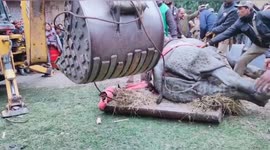
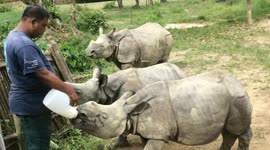
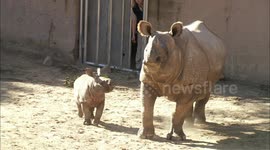
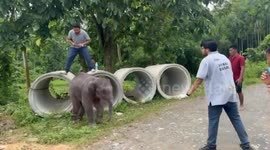
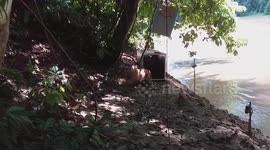
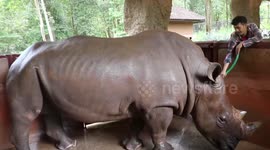
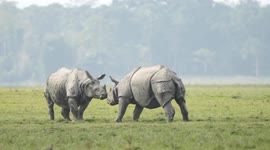
Visuals show that two one-horned rhino calves can be seen being successfully released into Kaziranga National Park. Both calves are seen being handled very carefully and affectionately. They are also seen being fed during the process.
Speaking to Newslions, Sonali Ghosh, Director, Kaziranga National Park, Assam, stated that two hand-raised greater one-horned rhinoceros calves were successfully moved from the Centre for Wildlife Rehabilitation and Conservation to the Kaziranga National Park on Tuesday. The translocation was conducted in accordance with internationally accepted conservation translocation protocols and marked an important step in long term species recovery efforts.
The Centre for Wildlife Rehabilitation and Conservation was established in 2002 as a joint initiative of the Assam Forest Department, the Wildlife Trust of India and the International Fund for Animal Welfare. The facility plays a vital role in rescuing wild animals affected by floods and other emergencies. It focuses mainly on animals from Kaziranga and surrounding landscapes. The centre provides emergency veterinary care and raises orphaned animals and rehabilitates those fit for release using carefully designed scientific protocols including pre release enclosures.
Since its establishment CWRC has rescued and managed more than seven thousand three hundred animals representing three hundred fifty seven species. Nearly sixty five percent of these animals have been successfully released back into natural habitats following treatment and rehabilitation. The centre has so far hand-raised twenty five rhinoceros calves. Twenty three were earlier released into Manas National Park while two have now been returned to Kaziranga.
At the time of the operation CWRC was caring for three rhinoceros calves. Two male calves named Chandra and Kanai were selected for translocation. Chandra was rescued on August two two thousand twenty from the Kaziranga Range of the park and is currently five years old. Kanai was rescued on August thirty one two thousand twenty one from Kuthori in Nagaon district and is now four years old. Officials confirmed that both animals are in good health.
The translocation was carried out after obtaining formal approval from the Chief Wildlife Warden of Assam under the Wildlife Protection Act. A Site Selection Committee was formed to identify appropriate locations for pre release enclosures. Following their relocation the rhinos were placed inside a pre-release enclosure within Kaziranga. Here they will slowly adapt to natural conditions before being released into the wider park area.
The operation was overseen by a veterinary team led by Dr Bhaskar Choudhury, Centre In Charge of CWRC along with Dr Sourabh Buragohain, Field Veterinary Officer, Kaziranga, Dr Mohit Nyal and Dr Mehdi. Experienced animal keepers assisted throughout the process. Senior officials from Kaziranga National Park led by Field Director, Dr Sonali Ghosh and DFO Arun Vignesh supervised the operation with support from range officers and wildlife experts.
Officials stated that the successful relocation reflects strong scientific wildlife management practices followed in Kaziranga National Park Tiger Reserve. The initiative highlights the commitment of conservation authorities to ensure that rescued wild animals especially the iconic greater one horned rhinoceros are given a chance to return to their natural habitat even after facing severe stress caused by floods and other natural calamities.
Categories
From the blog
Stories not Stock: 3 Reasons Why You Should Use UGC Instead of Stock Video
Video content is an essential part of a brand’s marketing strategy, and while stock footage has been a reliable go-to in the past, forward-thinking companies are looking to user-generated content for their video needs.
View post